
Choosing between HubSpot and Adobe Marketo Engage for your marketing automation often comes down to these five questions:
Do you need a unified CRM and marketing platform, or a dedicated B2B marketing automation engine that plugs into your existing CRM?
Is your team large enough to dedicate a full-time administrator to managing your marketing automation?
Are you running straightforward inbound campaigns, or complex multi-touch programs with advanced lead scoring and buying committee orchestration?
How important is time-to-value versus depth of capability?
Does the quality of the data feeding your marketing automation matter as much as the automation itself?
In short, here's what we recommend:
HubSpot is a unified customer platform for companies that want marketing, sales, and service connected on a single database. Its Smart CRM gives every team a shared view of every contact, and its AI layer (Breeze) handles everything from content creation to customer support. With 288,706 customers and a free tier, HubSpot makes it easy to get started and scale. However, its per-seat, per-hub pricing adds up quickly, and teams running complex B2B programs with multi-dimensional scoring and engagement program logic may find themselves wanting more.
Adobe Marketo Engage is an enterprise B2B marketing automation platform for teams that need campaign sophistication. Its Smart Campaigns, engagement programs with content exhaustion logic, and native multi-touch attribution (Marketo Measure) give marketing operations teams fine-grained control over every stage of the buyer journey. Adobe's pending acquisition of Semrush, announced in November 2025, signals further expansion of its marketing stack. The trade-off: a steep learning curve, an interface that reviewers consistently call dated, and a total cost of ownership that demands dedicated Marketo administration.
Both platforms are strong marketing automation engines. But neither one creates the data that feeds them. The contacts in your database, the accuracy of their job titles and email addresses, the intent signals that tell you which accounts are actively researching, the context behind why deals move forward: that intelligence layer determines whether your campaigns reach the right people at the right time. That's where ZoomInfo comes in.
ZoomInfo is an AI GTM platform built on a large B2B data foundation: 500M contacts, 100M companies, 135M+ verified phone numbers, and 200M+ verified business emails. Its GTM Context Graph (processing 1.5B+ data points daily) unifies this data with your CRM records, conversation transcripts, and behavioral signals to reveal not just what happened in your pipeline, but why. That intelligence drives seller execution in GTM Workspace, powers marketer and RevOps plays in GTM Studio, and flows into any tool through APIs and MCP, including native integrations with both HubSpot and Adobe Marketo Engage that enrich your database, surface in-market accounts, and power campaigns with verified contact data.
See how ZoomInfo integrates with your marketing automation stack.
HubSpot vs. Marketo vs. ZoomInfo at a glance
HubSpot | Adobe Marketo Engage | ZoomInfo | |
|---|---|---|---|
Core function | Unified CRM + marketing automation platform | Enterprise B2B marketing automation | AI GTM platform |
Marketing automation depth | Strong for most use cases | Deepest in B2B (engagement programs, content exhaustion, unlimited scoring models) | Campaign orchestration via GTM Studio; data and signals feed HubSpot or Marketo |
CRM | Built-in Smart CRM | Requires external CRM (Salesforce, Dynamics) | Integrates with Salesforce, HubSpot, Dynamics |
AI capabilities | Breeze AI across all hubs | GenAI email designer, Dynamic Chat AI, Agentic Lead Orchestration (announced) | GTM Context Graph, AI account research, AI-drafted outreach |
Lead scoring | Predictive lead scoring included | Multi-dimensional scoring with decay, unlimited models | Account Fit Score, buyer intent signals, predictive models |
Data enrichment | AI auto-enrichment from email, calls, web | Requires third-party enrichment | 500M contacts, 200M+ verified emails, built-in enrichment |
Intent data | Not native | Not native (relies on third-party via LaunchPoint) | Native intent from 210M IP-to-org pairings |
Free entry point | Free CRM (permanent) | No free plan or trial | Free Lite tier (permanent) + 7-day trial |
Learning curve | Low to moderate | Steep | Moderate |
Best for | SMB to mid-market teams wanting one platform | Enterprise B2B teams with dedicated marketing ops | Any B2B team needing verified data, intent signals, and GTM orchestration |
Marketing automation: breadth versus depth
HubSpot and Marketo both automate marketing campaigns. The difference is how deep they go.
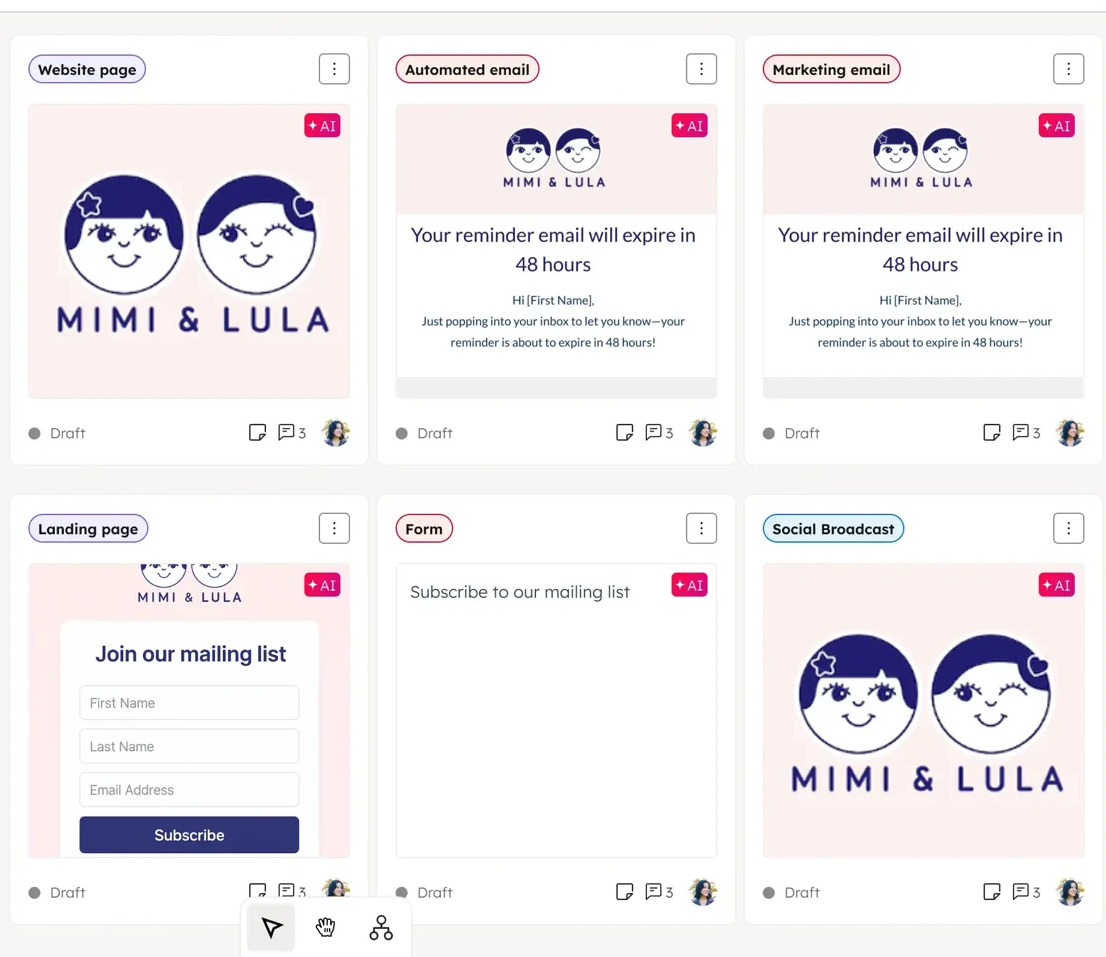
HubSpot Marketing Hub uses visual workflows triggered by contact behavior, lifecycle stage changes, or form submissions.
For most B2B marketing teams, these workflows handle everything they need: email nurture sequences, lead scoring, list segmentation, and multi-channel campaigns. The drag-and-drop builder is intuitive, and because every workflow operates on the same Smart CRM, data flows between marketing, sales, and service without integration plumbing.
Source: HubSpot
Where HubSpot hits its ceiling is in complex, nested campaign logic that enterprise B2B programs demand.
If you need engagement programs that detect when a contact has consumed all available content in a stream and transition them to a new nurture track, or scoring models that decay over time with multi-dimensional behavioral and demographic weighting, you'll find HubSpot's tools functional but not as granular.
Adobe Marketo Engage was built for this complexity.
Its Smart Campaign engine is the universal building block: every automation (whether an email send, a data update, a score change, or a CRM sync) runs through the same trigger-and-filter framework.
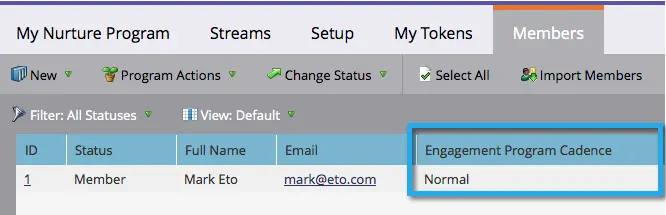
Engagement programs with content exhaustion tracking, per-person cadence control, and multi-stream content delivery give marketing ops teams granular control that HubSpot doesn't match. 150+ Smart List filters allow precise audience logic that combines behavioral, company, and CRM-synced attributes in a single campaign.
Source: Adobe
The trade-off is complexity. Marketo's proprietary constructs (Smart Lists, Tokens, Engagement Streams, Workspaces, Partitions) have no direct equivalents in other platforms. Adobe's own onboarding guidance acknowledges that untrained users routinely spend consulting hours on basic concepts.
ZoomInfo takes a different approach.
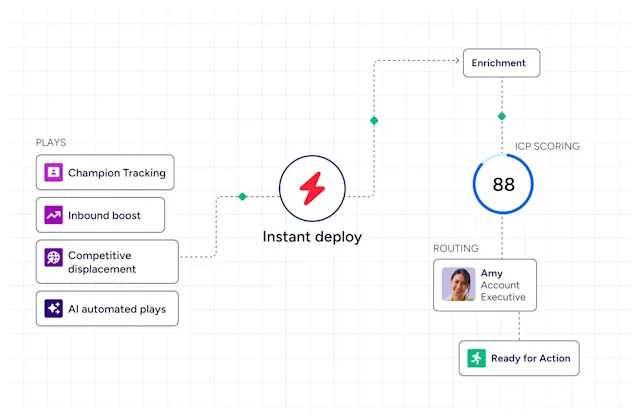
Rather than replacing your marketing automation, ZoomInfo's GTM Studio lets marketers define audiences in natural language, enrich them with first- and third-party data, and activate multi-channel plays (email, ads, direct mail, SDR routing) that launch in minutes instead of weeks.
The plays feed into your existing HubSpot or Marketo workflows, so you keep the automation engine you've invested in while adding the intelligence that tells it where to aim.
Source: ZoomInfo
After adopting GTM Studio, Impartner saw a 45% increase in website engagement and saved 15 hours through automation. "ZoomInfo has literally changed the way we go to market," said Jeremy Melius, Sr. Director of Marketing Operations. (Impartner)
The data problem neither platform solves alone
Here's the question most HubSpot vs. Marketo comparisons skip: where does the data come from?
HubSpot's Smart CRM enriches records using AI that pulls from email threads, recorded calls, and web data. This works for contacts already in your database, but it doesn't help you find the contacts you're missing.
Marketo's database is only as good as what flows into it from your CRM, form fills, and third-party connectors via LaunchPoint.
Neither platform generates verified contact data at scale. Neither tells you which companies are researching solutions like yours right now. Neither maps org charts with direct-dial phone numbers so your sales team can reach the actual buying committee.
ZoomInfo solves this.
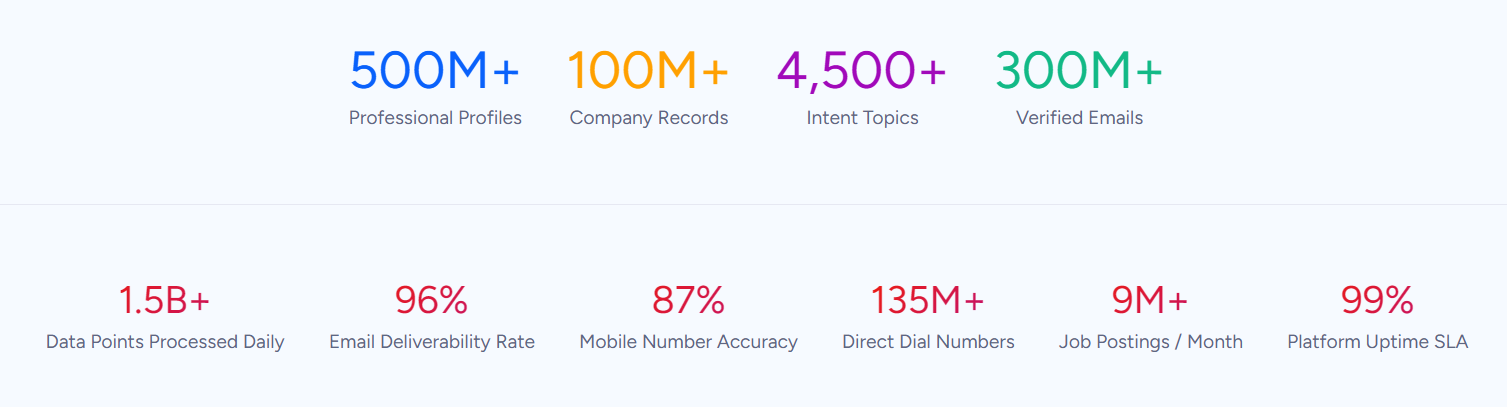
The platform maintains 500M contacts and 100M companies, processed through a verification pipeline backed by 300+ human researchers and achieving up to 95% accuracy on first-party data. In a Fortune 500 competitive RFP analyzing 25 million contacts across vendors, the independent consultant concluded that "no other competitor came even close."
Source: ZoomInfo
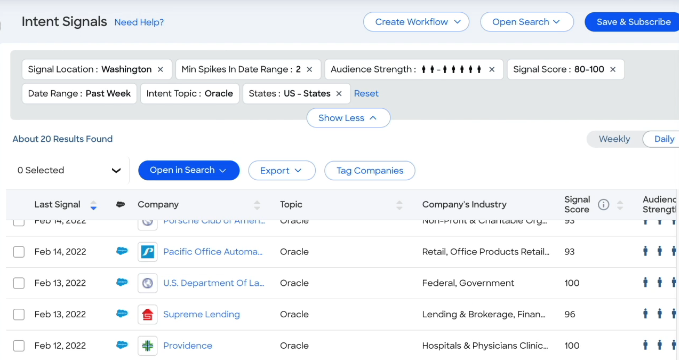
ZoomInfo's buyer intent data tracks signals from 210 million IP-to-Organization pairings and 6 trillion+ new keyword-to-device pairings sourced monthly. Guided Intent, exclusive to ZoomInfo, identifies topics historically correlated with deal success rather than requiring manual topic selection.
This data flows into HubSpot and Marketo through native integrations. For HubSpot users, ZoomInfo enriches CRM records, identifies website visitors, and syncs intent signals into workflows. For Marketo users, the LaunchPoint connector pushes enriched contacts and account intelligence into Marketo's database for scoring, segmentation, and campaign targeting.
Source: ZoomInfo
"ZoomInfo gives us the information we need to execute. It's already there, so we can be three steps ahead," said William Kenimer, VP of Revenue Operations. (Vensure)
CRM integration: built-in versus bolt-on
This is one of the clearest differences between HubSpot and Marketo.
HubSpot has a CRM built into the platform.
Every contact, company, deal, and ticket lives in the same database that Marketing Hub, Sales Hub, and Service Hub share. A lead captured on a landing page is visible to sales immediately, with full context: which pages they visited, which emails they opened, what content they downloaded. No sync delays, no field mapping, no integration maintenance.
Source: HubSpot
Marketo does not include a CRM.
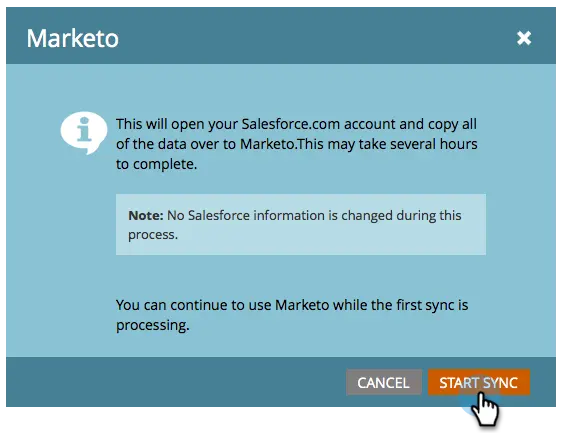
It requires a separate CRM (most commonly Salesforce or Microsoft Dynamics) connected via native bidirectional sync. The Salesforce sync runs continuously with a 5-minute pause between cycles, syncing leads, contacts, accounts, users, opportunities, campaigns, and custom objects. The initial sync during setup can take hours or days as the full database copies across.
Source: Adobe
For organizations already running Salesforce and needing Marketo's campaign sophistication, this bolt-on model works well. Marketo's Sales Insight panel embeds marketing intelligence inside Salesforce records, surfacing engagement history, lead scores, and "Best Bets" (a ranked list of the hottest leads) without requiring reps to leave their CRM.
For teams starting fresh or wanting fewer moving parts, HubSpot's built-in CRM eliminates an entire category of integration complexity.
ZoomInfo integrates natively with Salesforce, HubSpot, and Microsoft Dynamics, enriching records across whichever CRM you use. The integration is bidirectional: ZoomInfo pushes verified data into your CRM, and your CRM data feeds into ZoomInfo's GTM Context Graph to improve targeting and recommendations.
Lead scoring and routing: rules versus intelligence
Lead scoring determines which prospects get sales attention and which stay in nurture. The three platforms approach it differently.
HubSpot offers predictive lead scoring that uses machine learning to analyze which contact properties and behaviors correlate with closed deals.
It works well and requires minimal configuration. For teams that want manual control, HubSpot also supports custom scoring with points assigned to specific behaviors and attributes. The limitation: HubSpot supports a single composite score, without the multi-dimensional scoring models that complex B2B organizations often need.
Marketo gives marketing ops teams the most scoring control available.
You can build unlimited scoring models with separate behavioral and demographic dimensions, apply decay logic so scores decrease when contacts go quiet, and set up multi-dimensional rules that account for company fit, buying stage, and engagement intensity simultaneously.
Score thresholds trigger automatic handoff actions: CRM task creation, sales alerts, or pipeline stage changes. This depth makes Marketo the choice for organizations running complex qualification frameworks.
ZoomInfo adds a signal layer that neither HubSpot nor Marketo generates on its own.
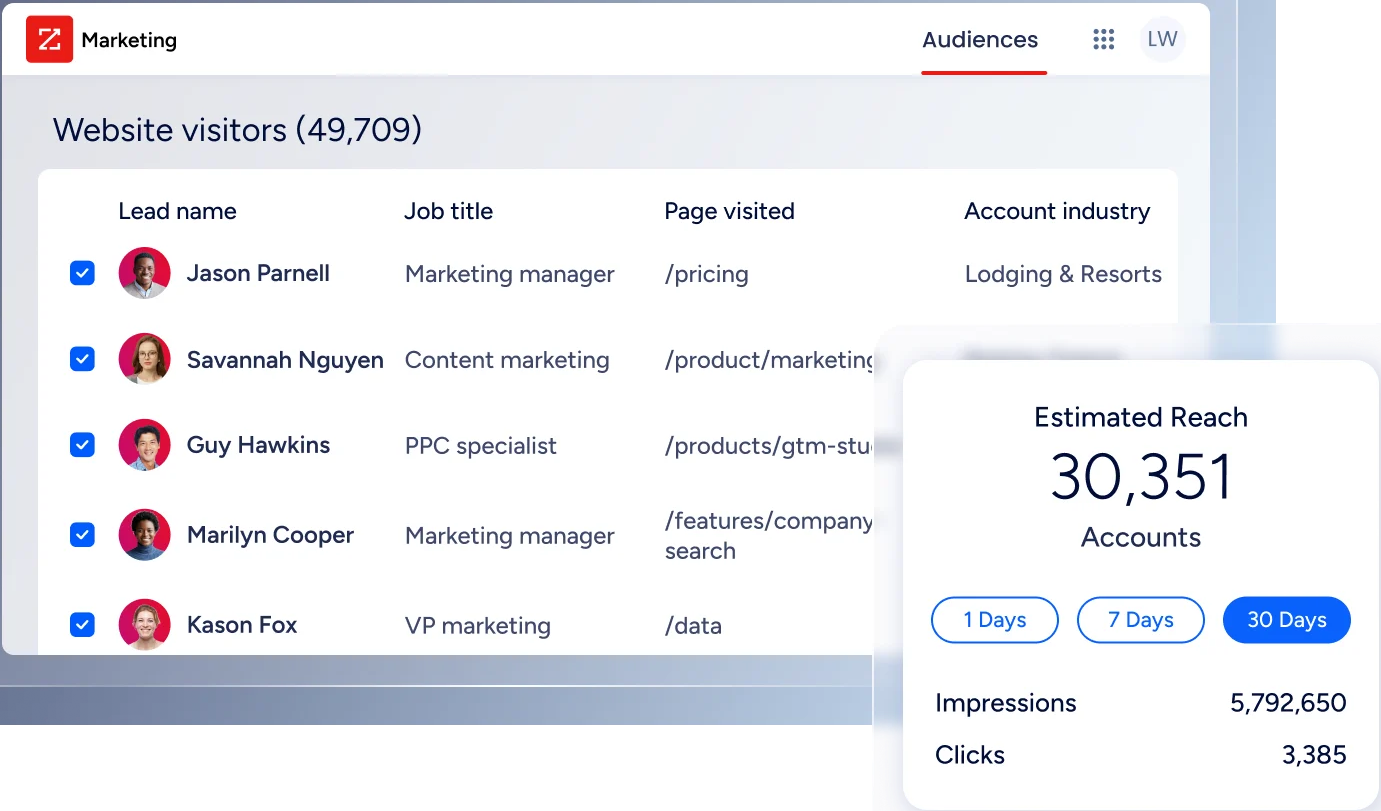
Account Fit Score uses predictive AI to score accounts 0-100 based on company attribute patterns that predict conversion. Buyer Intent identifies which accounts are researching topics related to your product. Website visitor identification reveals which companies are on your site and who is browsing.
These signals feed into HubSpot's or Marketo's scoring models, making them more accurate because they're based on verified, current data rather than whatever happens to be in your CRM.
Source: ZoomInfo
Seismic attributed 39% of active pipeline to opportunities identified or influenced by ZoomInfo signals, with 54% productivity gains across the sales team. (Seismic)
AI capabilities compared
All three platforms invest heavily in AI, but in different areas.
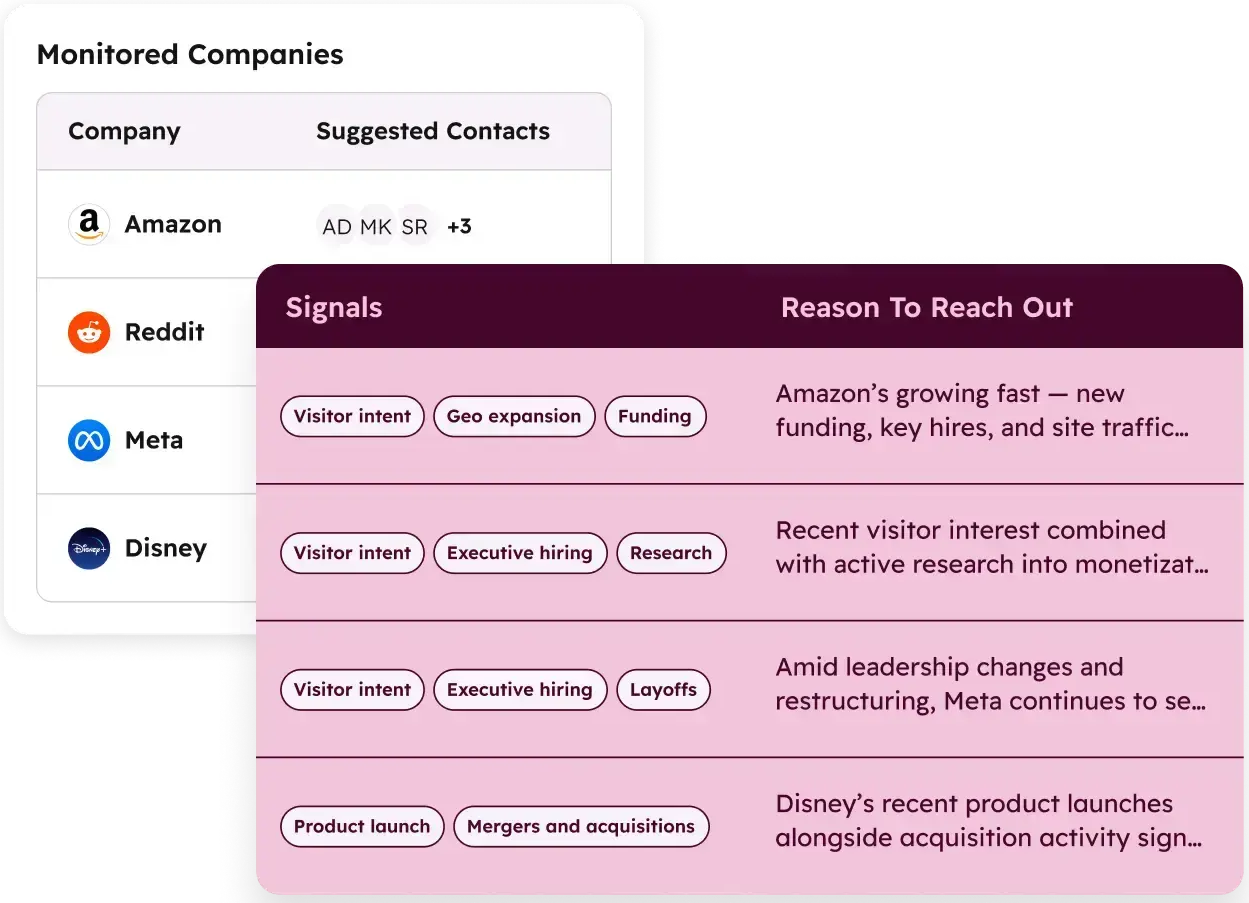
HubSpot's Breeze runs across all hubs: a Customer Agent that resolves over 50% of support conversations autonomously, a Prospecting Agent that monitors buying signals and drafts personalized outreach, a Data Agent for natural-language CRM queries, and a Content Agent for creating marketing content.
Breeze draws on HubSpot's full CRM data, so its outputs reflect each company's actual customer history. Several features remain in Beta, including AI-Powered Segmentation, Personalization, and Marketing Studio.
Source: HubSpot
Marketo's AI investments center on email creation and conversational marketing.
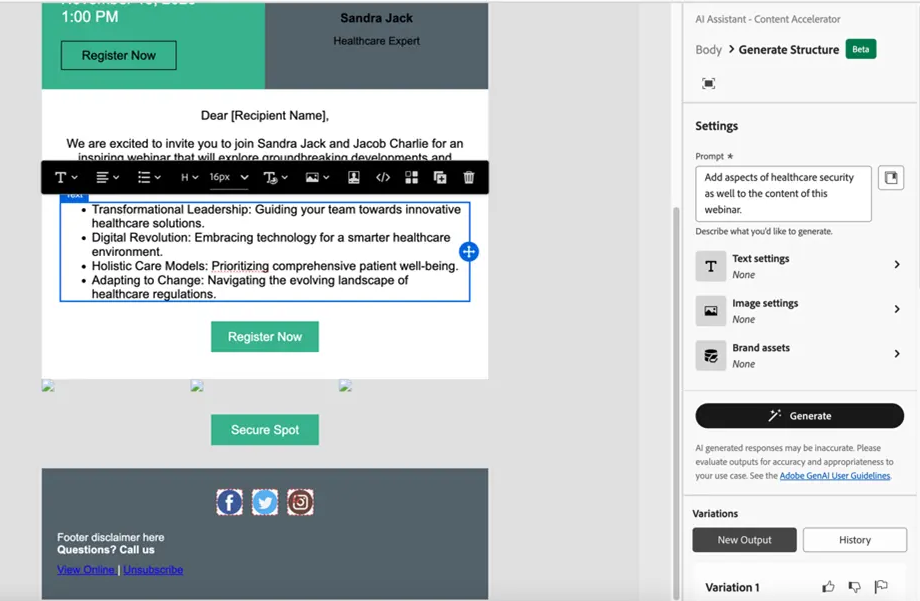
The GenAI Email Designer generates subject lines, preheaders, and full email copy using the buying group role and journey stage as inputs. Dynamic Chat uses generative AI to answer visitor questions from a brand-controlled Response Library.
The most ambitious announcement is the Agentic Lead Orchestration engine, which will let marketers collaborate with an AI agent to design and optimize lead marketing journeys on a visual canvas, though detailed documentation has not yet been published.
Source: Adobe
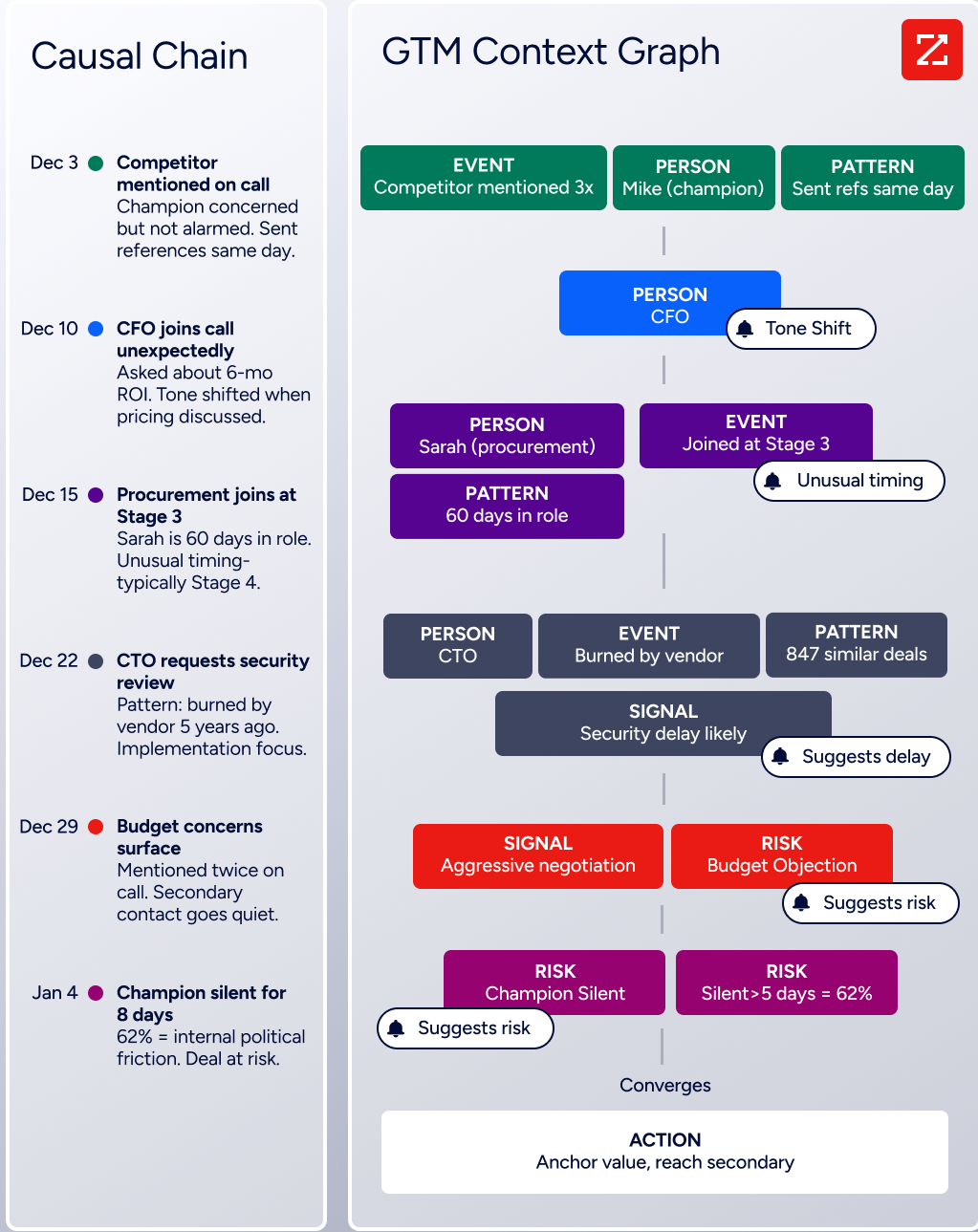
ZoomInfo's GTM Context Graph is where AI meets data at scale.
Processing 1.5B+ data points daily, the GTM Context Graph combines ZoomInfo's B2B data with CRM records, conversation intelligence (via Chorus), and behavioral signals to surface connections between signals and outcomes. The AI doesn't just know that a deal moved stages; it understands why (executive sponsorship entered, budget was approved, a competitor was mentioned).
This contextual intelligence powers AI-drafted outreach in GTM Workspace, audience creation in GTM Studio, and flows into any tool via APIs and MCP.
Source: ZoomInfo
The practical distinction: HubSpot and Marketo apply AI to make their own platforms more productive. ZoomInfo applies AI to make your entire GTM stack more intelligent, regardless of which marketing automation platform you use.
Account-based marketing capabilities
ABM has become central to B2B marketing strategy. Each platform handles it differently.
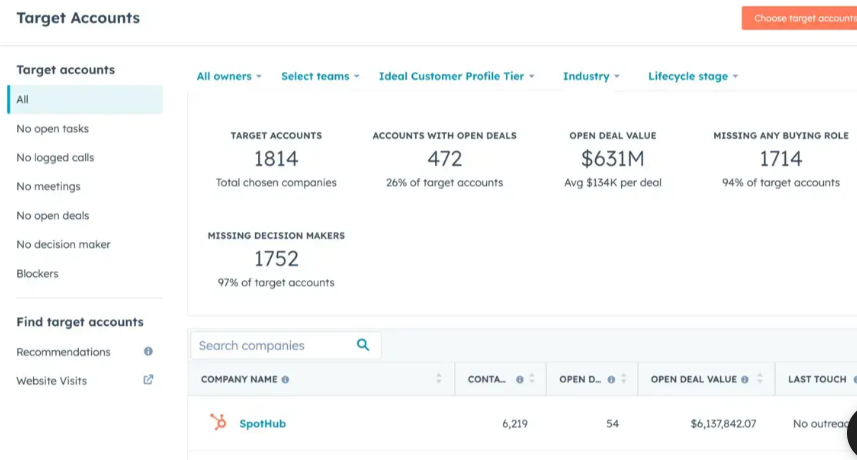
HubSpot supports account-based strategies through its Smart CRM, where contacts are associated with company records and marketing can target by company-level properties. Target account lists, company scoring, and account-level reporting are available.
However, HubSpot's ABM capabilities are basic compared to dedicated ABM platforms, and the platform doesn't include native intent data.
Source: HubSpot
Marketo offers deeper ABM functionality with lead-to-account mapping using eight matching methods, a Predictive Engagement Score that grades accounts by engagement intensity, and account-level attribution through Marketo Measure (Ultimate tier).
Adobe is extending ABM further with Journey Optimizer B2B Edition, which adds buying group orchestration to Marketo's person-level automation.
ZoomInfo was built for account-based go-to-market from the ground up.
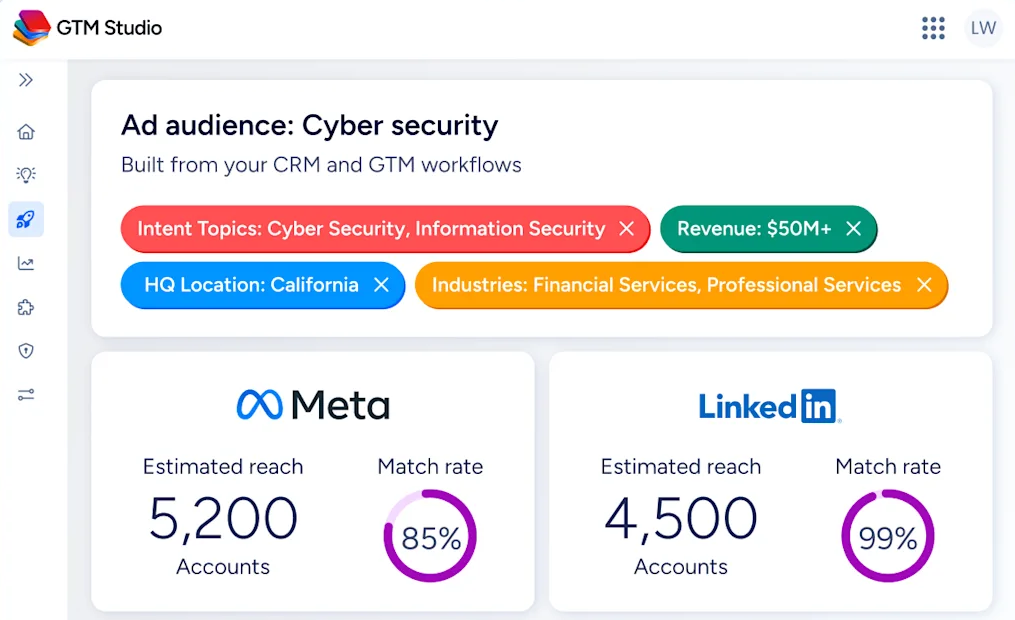
Named a Leader in the Gartner Magic Quadrant for ABM Platforms for two consecutive years, ZoomInfo provides the data layer that makes ABM work: identifying target accounts using 300+ company attributes, mapping buying committees with verified direct dials and emails, detecting in-market signals before accounts engage your brand, and orchestrating multi-channel plays through GTM Studio. ZoomInfo's native DSP deploys display ads against these accounts without a separate ad-tech vendor.
Source: ZoomInfo
For most B2B marketing teams, the most effective ABM setup is ZoomInfo providing the account intelligence and targeting, with HubSpot or Marketo handling the campaign execution.
Redwood Logistics achieved a 99% reduction in CPC and a 310% increase in CTR using ZoomInfo's audience insights. (Redwood Logistics)
Attribution and reporting
Understanding which campaigns generate pipeline (not just leads) matters for marketing teams justifying their budget.
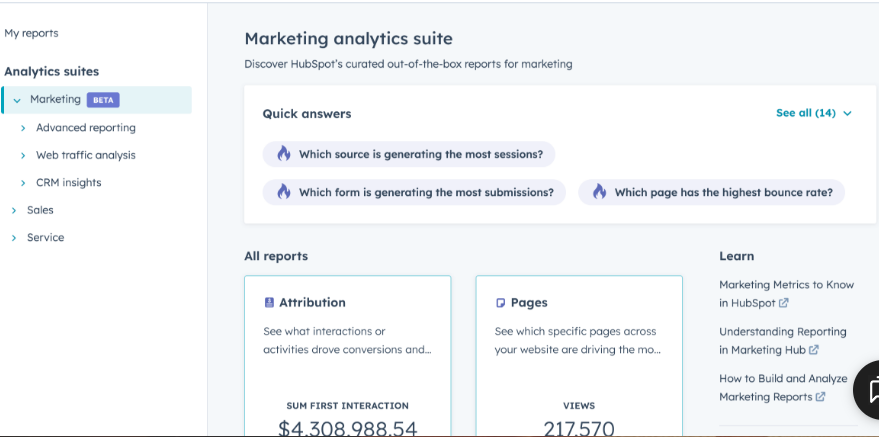
HubSpot provides multi-touch revenue attribution and customer journey analytics (called Pathfinder) at Professional and Enterprise tiers.
Because attribution data lives in the same CRM as sales data, connecting marketing touches to closed revenue is straightforward. The reporting works well for most mid-market teams, though it doesn't match the depth of dedicated attribution platforms.
Source: HubSpot
Marketo Measure (included only in the Ultimate tier) is Adobe's multi-touch B2B attribution platform, offering six attribution models that run simultaneously.
The Custom Model builder lets teams assign any credit weight to any touchpoint. At the Ultimate tier, Attribution AI uses pattern recognition to surface the incremental contribution of each touchpoint. For enterprise marketing teams that need to prove ROI across complex, multi-channel programs, Marketo Measure is one of the most capable tools available.
However, many teams on lower Marketo tiers rely on third-party BI tools to fill reporting gaps.
ZoomInfo adds attribution context that neither platform captures natively.
By connecting intent signals, website visitor data, and engagement intelligence to pipeline outcomes, ZoomInfo helps teams understand not just which touchpoint a lead came from, but whether the account was already in-market, which competitors they were researching, and which members of the buying committee were engaging.
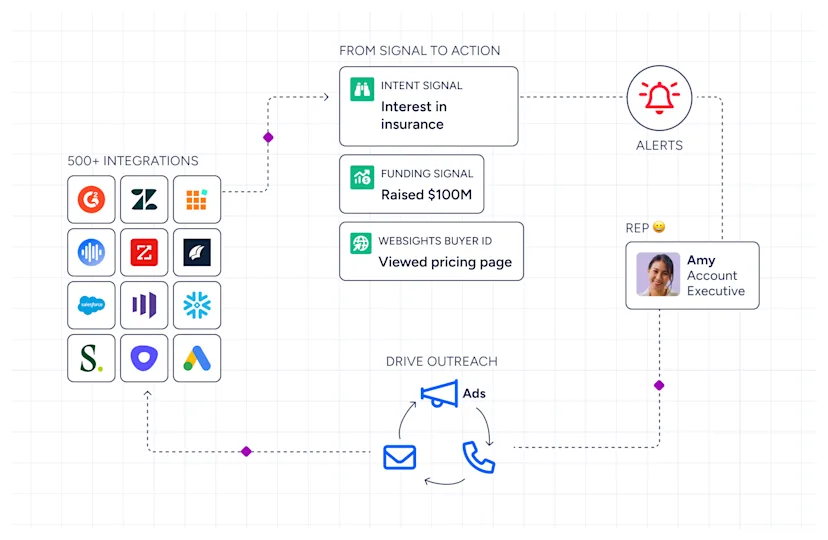
GTM Studio's dashboards track engagement, funnel progression, and top-performing segments in real time.
Pricing: transparency versus negotiation
Pricing models reveal what each platform optimizes for.
HubSpot publishes its prices.
Marketing Hub Professional starts at $800/month (annual) for 2,000 marketing contacts with 3 Core Seats included, plus a mandatory $3,000 one-time onboarding fee. Enterprise starts at $3,600/month for 10,000 contacts, with a $7,000 onboarding fee.
Additional contacts cost extra, and if you mix hub tiers (say, Marketing Hub Enterprise with Sales Hub Professional), all Core Seats are billed at the highest tier rate. The Starter Customer Platform at $15/seat/month (annual) bundles all hubs and is a good value for small teams.
Adobe Marketo Engage does not publish prices.
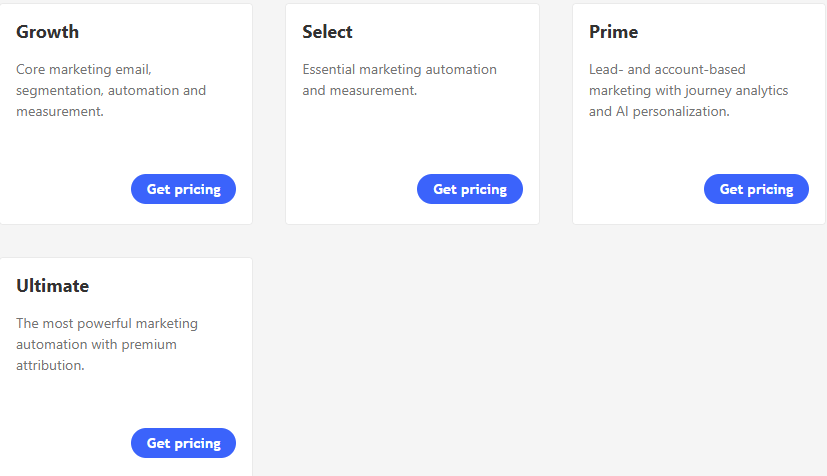
Pricing is custom-quoted based on database size, features needed, and contract terms. Four packages exist (Grow, Select, Prime, Ultimate), with meaningful feature gating between them: sandbox environments are only included at Prime and above, Marketo Measure only at Ultimate, and Dynamic Chat GenAI requires a separate Prime add-on.
A large add-on catalog (Sales Insight, Website Personalization, additional API calls, Dynamic Chat conversation packs) adds to the total. The platform also requires a dedicated, trained administrator, which is its own ongoing cost.
Source: Adobe
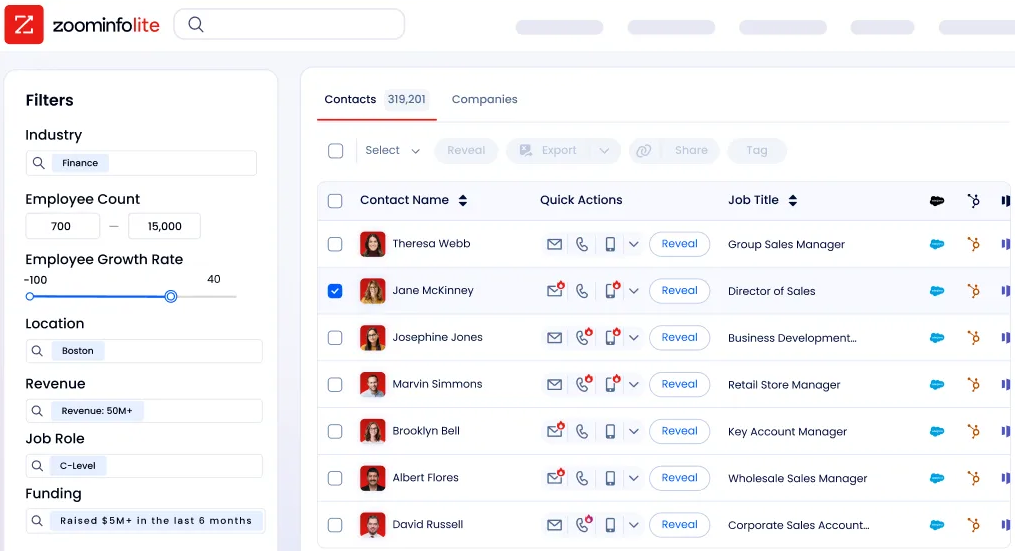
ZoomInfo also uses custom-quoted pricing organized around Sales, Marketing, and Operations product lines with Professional, Advanced, and Enterprise tiers. A permanent ZoomInfo Lite tier provides free access to the B2B database with 10 monthly export credits, and a 7-day free trial offers access to core features.
Source: ZoomInfo
The key pricing insight: HubSpot and Marketo charge for the automation engine. ZoomInfo charges for the data and intelligence that make the engine effective.
Many teams use ZoomInfo alongside HubSpot or Marketo, and the ROI case rests on whether better data produces better pipeline. Documented results suggest it does: Smartsheet reported a 40%+ increase in form fills, 84% increase in MQLs, and 59% increase in win rate using ZoomInfo's FormComplete.
Implementation and learning curve
HubSpot is designed for fast time-to-value.
The free CRM serves as a low-friction onboarding ramp, and the platform's consistent interface across all hubs means learning one module teaches you the patterns for the rest. HubSpot Academy offers over 200,000 certifications, all free. Most teams are productive within weeks.
Marketo requires significant upfront investment.
Adobe's implementation guidance explicitly notes that "technical setup and planning can take longer than you think" and recommends building internal training programs. The platform's proprietary terminology (a formally maintained Marketo Engage Glossary signals the vocabulary overhead) and complex campaign architecture mean most organizations need a dedicated Marketo administrator. Plan for months, not weeks.
ZoomInfo falls between the two.
The core search and enrichment tools are intuitive for individual users. GTM Studio's natural-language interface was designed to remove the engineering dependency that slows traditional marketing ops. ZoomInfo redesigned its onboarding program to span 90 days, producing a 25% improvement in satisfaction scores. GTM Workspace "deploys in weeks, not months."
HubSpot vs. Marketo vs. ZoomInfo: Which should you choose?
The right answer depends on what problem you're solving.
Choose HubSpot if:
You want marketing, sales, and service on one platform with a shared CRM
Your team needs to move fast with minimal technical overhead
You're running inbound-led growth and want a platform that scales from free to enterprise
Time-to-value matters more than campaign complexity
You want AI features built into every hub without separate subscriptions
Choose Adobe Marketo Engage if:
You run complex B2B programs with long sales cycles and multi-stakeholder buying committees
You have a dedicated marketing operations team (or will hire one)
Campaign sophistication (engagement programs, content exhaustion, multi-dimensional scoring) is non-negotiable
You need multi-touch revenue attribution at the enterprise level
You're already in the Adobe ecosystem or use Salesforce as your CRM
Add ZoomInfo if:
The quality and completeness of your contact database directly limits your pipeline
You need to know which accounts are in-market before they fill out a form
Your ABM programs need verified buying committee data, not just company names
You want one intelligence layer that powers both your marketing automation and your sales team
You're building for a future where AI agents need verified data to work well
Start with ZoomInfo Lite for free or request a demo to see the full platform.
The most effective B2B marketing stacks aren't built on a single tool. HubSpot or Marketo handles campaign orchestration. ZoomInfo provides the data, signals, and context that tell those campaigns where to aim and when to fire.
Together, they create a closed loop: ZoomInfo identifies and enriches the right accounts, your marketing automation engages them at scale, and the results feed back into ZoomInfo's GTM Context Graph to sharpen the next round of targeting.
Choose the automation platform that fits your team's complexity needs, then make sure the intelligence layer powering it is the best available.
HubSpot vs. Marketo vs. ZoomInfo FAQ
What is the fundamental difference between HubSpot, Marketo, and ZoomInfo?
HubSpot is a unified customer platform that combines CRM, marketing automation, sales, and service tools on a single shared database.
Adobe Marketo Engage is a dedicated B2B marketing automation platform designed for complex campaign orchestration, lead scoring, and multi-touch attribution, requiring a separate CRM.
ZoomInfo is an AI GTM platform that provides verified B2B contact data, buyer intent signals, and AI account insights, integrating natively with both HubSpot and Marketo to power their campaigns with better data.
Which platform is better for small to mid-sized B2B companies?
HubSpot is the stronger choice for smaller teams. Its free CRM, lower learning curve, and unified platform design mean you can start generating value without dedicated technical staff.
Marketo is designed for organizations with the resources to employ a dedicated administrator and the campaign complexity to justify the investment.
ZoomInfo Lite offers a free permanent tier for small teams that need verified contact data.
Do I need ZoomInfo if I already have HubSpot or Marketo?
HubSpot and Marketo automate campaigns but don't generate B2B contact data or intent signals on their own. ZoomInfo fills this gap with 500M contacts, 200M+ verified business emails, and buyer intent data that identifies in-market accounts.
Teams that add ZoomInfo to their stack typically see measurable improvements in data quality, targeting accuracy, and pipeline generation.
Which platform has the steepest learning curve?
Marketo has the steepest learning curve. Its proprietary campaign constructs, dedicated glossary, and implementation complexity typically require months of onboarding and a trained administrator.
HubSpot is the easiest to learn, with most teams productive within weeks.
ZoomInfo's core search and enrichment tools are intuitive, though fully leveraging GTM Studio and GTM Workspace requires a structured onboarding period.
How does pricing compare across the three platforms?
HubSpot publishes its prices, with Marketing Hub Professional starting at $800/month plus a $3,000 mandatory onboarding fee. Marketo requires a custom quote and does not publish pricing, though total cost of ownership includes the platform, a dedicated admin, and potential add-ons.
ZoomInfo also uses custom-quoted pricing, with a permanent free Lite tier and a 7-day trial available. Many organizations budget for both a marketing automation platform and ZoomInfo, treating them as complementary investments.
Can ZoomInfo replace HubSpot or Marketo?
ZoomInfo is not a marketing automation replacement. It is a data and intelligence platform that integrates with HubSpot and Marketo to make them more effective.
ZoomInfo's GTM Studio can orchestrate multi-channel plays, but it works alongside your marketing automation, not instead of it. The three products serve different layers of the B2B marketing stack.
Which platform is best for account-based marketing?
ZoomInfo is the strongest ABM platform of the three, named a Leader in the Gartner Magic Quadrant for ABM Platforms for two consecutive years. It provides account identification, buying committee mapping, intent signals, and multi-channel activation in one platform.
Marketo offers deeper ABM automation through lead-to-account mapping and Predictive Engagement Scores, particularly when paired with Adobe Journey Optimizer B2B Edition. HubSpot supports ABM basics but lacks native intent data and dedicated ABM orchestration.
How do the platforms integrate with each other?
ZoomInfo integrates natively with both HubSpot and Marketo. For HubSpot, ZoomInfo enriches CRM records, syncs intent signals, and identifies website visitors within the platform. For Marketo, ZoomInfo connects via LaunchPoint to push enriched contacts and account intelligence into the Marketo database. ZoomInfo also offers API and MCP access for custom integrations with any tool in your stack.
